The Middle East war and its influence on the global economy
presentation of the Middle East conflict's effects on the global economy and potential solutions
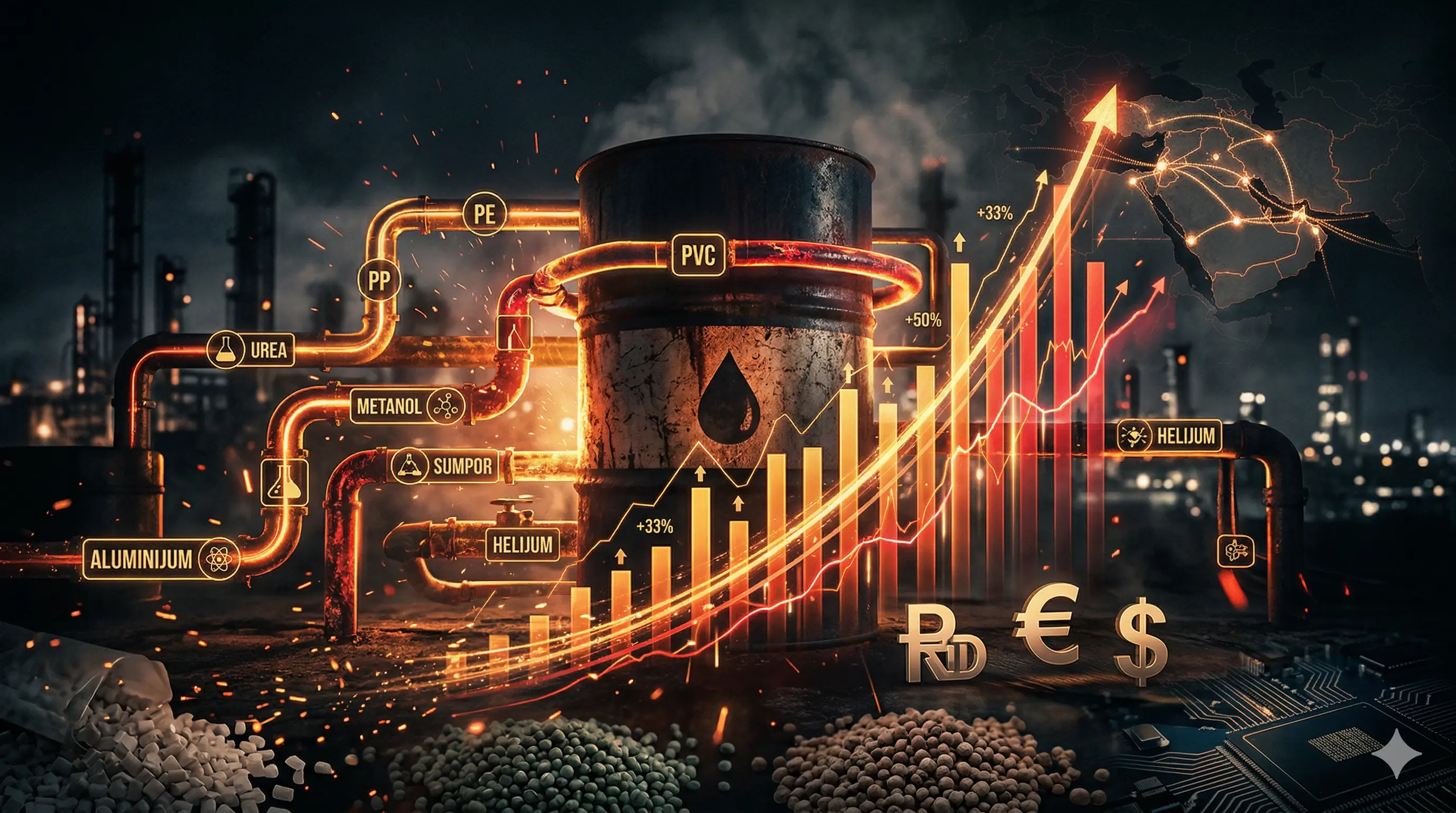
The Global "Blood Test" of Industry: The Middle East as a Hub, Not Just a Pump
Commodities Market Analysis – March 2026
For decades, the world watched the Middle East through a single lens: the price of a barrel of crude oil. March 2026 has delivered a painful reality check to the global economy — this region is no longer just a "gas station." It has become the central nervous system of the world's basic industries. According to data from Lazard Geopolitical Advisory, disruptions in this region now directly impact everything from the price of bread at the supermarket to the production of the latest AI chips.
1. The Hidden Dominance: Beyond Oil
While oil remains critical, the region's true leverage lies in the raw materials that sit at the beginning of nearly every supply chain. The numbers are stark:
- Agriculture under pressure: The region supplies 50% of the world's sulfur and 34% of global urea. Without these inputs, fertilizer production halts — directly threatening global food security.
- Technology's lifeline: With a 30% share of global helium production, the Middle East holds the keys to medical imaging (MRI machines) and semiconductor manufacturing.
- Plastics and infrastructure: Significant shares of methanol (40%), polyethylene (15%), and aluminum (9%) make the region indispensable for the automotive and construction industries.
2. The March Shock: Price Snapshot (February vs. March 2026)
The escalation of tensions and logistics disruptions at the Strait of Hormuz in March 2026 triggered a wave of price increases that reached +50% in some sectors.
| Commodity | Feb 28, 2026 | End of March 2026 | Change |
|---|---|---|---|
| Crude Oil (Brent) | ~$64 / bbl | $95 – $112+ / bbl | 📈 +50–75% |
| Polyethylene (PE) | ~$1,150 / t | $1,500+ / t | 📈 +30% |
| PVC Powder (K-67) | ~€930 / t | €1,100+ / t | 📈 +20% |
| PE/PP Waxes | ~$2,000 / t | $2,700+ / t | ⚠️ Critical |
| Urea (Fertilizer) | ~$380 / t | $520+ / t | 📈 +37% |
Note: Brent crude has continued rising through late March, touching $107–112/bbl in the final days of the month — exceeding initial estimates and confirming the severity of the disruption.
The current commodities market is defined by extreme price volatility compared to late February. The primary driver is the escalation of geopolitical tensions in the Middle East and the effective blockade of the Strait of Hormuz, which has directly disrupted supply chains for petrochemicals and fertilizers.
3. Detailed Sector Analysis
Petrochemicals (Polyethylene and Polypropylene)
Markets were relatively stable at the end of February, but the March supply disruption from Saudi Arabia and the UAE triggered panic buying. European plastics processors are currently paying premiums of over €200 per tonne simply to secure delivery, as inventories have dropped to critically low levels.
Agricultural Cycle (Urea and Sulfur)
The fact that the Middle East controls 50% of the world's sulfur is now showing its full impact. Sulfur is a key input for phosphate fertilizer production. With transport severely disrupted, sulfur prices on some markets have spiked by nearly 60% — a cost increase that will feed directly into food prices in the next harvest cycle.
Energy and Gas
While U.S. natural gas prices (Henry Hub) have remained relatively stable due to a mild winter (~$3.80/MMBtu), LPG and LNG prices in Asia and Europe have surged as buyers scramble to find alternative supply routes that bypass the Middle East.
4. PVC Powder — A Specific Case
PVC powder (K-67 and other grades) follows a similar but somewhat more complex trajectory than polyethylene or polypropylene. While PE and PP are purely oil-dependent, PVC production is also tied to electricity costs, salt, and coal (depending on the production method).
| Product Type | Feb 28, 2026 | End of March 2026 | Change |
|---|---|---|---|
| PVC K-67 (Europe/Serbia) | ~€920–950 / t | €1,080–1,150 / t | +18–20% |
| PVC K-65 (Asian imports) | ~$840 / t | ~$1,050 / t | +25% |
| VCM (Vinyl Chloride Monomer) | ~$720 / t | ~$910 / t | +26% |
Key drivers:
- Ethylene price surge — Since European PVC is derived from ethylene (oil-based), the jump in crude from $64 to over $100/bbl has inflated production costs directly.
- Turkey as a regional bellwether — Turkey, the main trading hub for PVC in the Balkans region, is recording record price increases in March. With Gulf supply nearly halted, European processors have pivoted to costlier local and domestic sources.
- Additive costs — Stabilizers (calcium-zinc types) have increased by over 15% since early March, adding further pressure on end-product pricing.
- China's coal-based production — China produces PVC dominantly via the calcium carbide (coal) route and is not directly exposed to Middle Eastern oil. However, Chinese exchange prices have still risen ~16% in the past month as global demand pressure hits all available supply sources.
5. Waxes — The Quiet Crisis
The situation with waxes (polyethylene, polypropylene, and paraffin) may be the most acute in the entire petrochemical sector. The reason is structural: wax is a specialty by-product, not a primary focus of refineries. When refinery throughput falls (as is now the case due to the Middle East crisis), wax production is the first to suffer.
PE and PP Waxes
| Wax Type | Typical Use | Price Change | Availability |
|---|---|---|---|
| PE Wax | PVC pipes, cables, coatings | +33% | Very Low (Deficit) |
| PP Wax | Textiles, automotive plastics | +30% | Moderate (Stocks depleting) |
| Paraffin (0.5% oil) | Candles, packaging, rubber | +28% | Available at high cost |
| Paraffin (1–2% oil) | Wood industry, insulation | +22% | Stable but expensive |
What's happening beneath the surface:
- Force Majeure declarations — Several major European and Middle Eastern producers have declared Force Majeure in the final two weeks of March, voiding fixed-price contracts and supplying only available surplus at spot market prices.
- Synthetic waxes (Fischer-Tropsch) — These gas-derived waxes have become extremely expensive, as Qatar (the world's largest producer) is under severe logistical pressure in the Strait of Hormuz.
- Shipping cost explosion — Even when product is found in Asia, container freight rates have nearly doubled since February 28, as vessels must now route around Africa (Cape of Good Hope) instead of through the Suez Canal.
The biggest problem right now is not only price — it is availability. Wax and specialty polymer producers have invoked Force Majeure, contracts are being torn up, and product is going to whoever pays the most in cash.
6. Outlook: Three Scenarios
Scenario A: "New Normal" (Probability: 60%)
Prices stabilize at elevated levels. Logistics permanently shift to longer routes (around Africa), keeping freight costs elevated indefinitely. Companies will need to adopt dynamic pricing and real-time inventory digitalization to navigate daily volatility.
Scenario B: "De-escalation and Correction" (Probability: 25%)
If a diplomatic solution emerges, crude oil could fall back toward $70–75/bbl. However, derivative prices — PVC, waxes, and specialty chemicals — will recover far more slowly, as depleted inventories take months to rebuild.
Scenario C: "Structural Realignment" (Probability: 15%)
A complete and sustained cutoff from Gulf supply forces Europe and North America to accelerate investment in domestic capacity and advanced recycling (e.g., chemical recycling of polypropylene). This is a multi-year process (3–5 years), and the interim period would be characterized by chronic shortages and sustained cost inflation.
Analysis based on IEA, EIA, Lazard Geopolitical Advisory, and market data available as of late March 2026.